
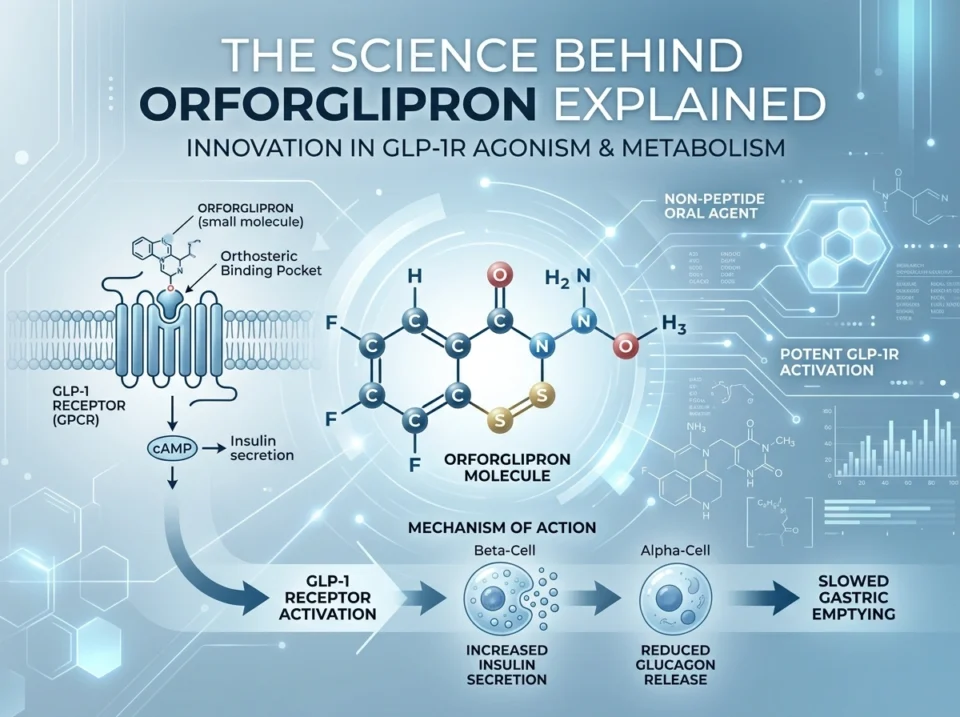
A new name keeps surfacing in conversations about metabolic health, weight management, and type 2 diabetes care: Orforglipron. Unlike many treatments that came before it, this compound has caught the attention of researchers and patients for one striking reason. It promises the benefits of a popular class of therapies without the need for needles. But what actually happens inside the body when someone takes it? Understanding the science helps explain why this molecule has generated so much excitement.
This article breaks down what Orforglipron is, how it works on a cellular level, and why its design could reshape how people approach weight and blood sugar control.
What Is Orforglipron?
Orforglipron is an oral, small-molecule GLP-1 receptor agonist. That term may sound technical, so let’s unpack it piece by piece.
“GLP-1” stands for glucagon-like peptide-1, a natural hormone your gut releases after you eat. “Receptor agonist” means a substance that activates a specific receptor, in this case the GLP-1 receptor. And “small-molecule” describes its chemical structure, which is far simpler than the large peptide-based drugs that dominate this field.
Most GLP-1 medicines available today are peptides. Peptides break down easily in the digestive system, which is why they usually require injection. Orforglipron takes a different path. Because it is a small molecule rather than a fragile peptide, it can survive the journey through the stomach and be taken as a daily pill. You can explore more details about this compound through resources dedicated to orforglipron.
How GLP-1 Works in the Body
To appreciate the science, it helps to understand the natural hormone first.
When you eat, cells in your intestine release GLP-1. This hormone sends several important signals throughout the body:
- It tells the pancreas to release insulin, but only when blood sugar is high. This is why GLP-1 carries a low risk of dangerous blood sugar drops.
- It slows the rate at which your stomach empties, so you feel full longer.
- It acts on the brain’s appetite centers, reducing hunger and cravings.
- It lowers the release of glucagon, a hormone that raises blood sugar.
The challenge with natural GLP-1 is that it disappears within minutes. Enzymes in the body break it down almost as fast as it appears. That short lifespan limits its usefulness as a treatment on its own.
The Mechanism of Action
This is where Orforglipron does its work. It binds to the same GLP-1 receptor that the natural hormone uses, switching it on and keeping it active for far longer than the body’s own GLP-1 could.
By activating these receptors, Orforglipron recreates the helpful effects of the natural hormone. The pancreas responds with better-timed insulin release. The stomach empties more slowly. Appetite signals quiet down. Over time, these combined actions support steadier blood sugar levels and reduced food intake.
What makes the molecule especially interesting is how it fits the receptor. Researchers designed it to be non-peptide, meaning it does not rely on the amino-acid chains that make traditional GLP-1 drugs vulnerable to digestion. This structural difference is the foundation of its oral availability. The body absorbs it through the gut wall, and it then circulates to do its job.
Why an Oral Option Matters
For many people, the idea of a daily or weekly injection is a real barrier. Some have a genuine fear of needles. Others dislike the routine of storing, preparing, and administering an injectable medicine. A pill removes much of that friction.
Beyond comfort, an oral medication may be easier to scale and distribute. Pills do not always require refrigeration in the same way some injectable peptides do, and they can be simpler to manufacture at high volume. If a treatment is more convenient, people are more likely to stay consistent with it. And consistency often determines whether a therapy delivers lasting results.
This is the heart of why Orforglipron has drawn so much attention. It aims to combine the proven benefits of GLP-1 activation with the practicality of a tablet.
Potential Benefits Under Study
Research on Orforglipron has focused on two main areas: blood sugar control and weight reduction.
In studies involving people with type 2 diabetes, the compound has shown the ability to lower hemoglobin A1c, a key marker of long-term blood sugar levels. In trials examining weight, participants have experienced meaningful reductions in body weight, consistent with how GLP-1 therapies suppress appetite and slow digestion.
These outcomes matter because excess weight and high blood sugar are closely linked. Improving one often helps the other. By targeting the shared biology behind both, a GLP-1 receptor agonist can address several metabolic concerns at once.
The Current Research Context
Orforglipron has moved through various stages of clinical testing, with researchers carefully measuring its effects, dosing, and tolerability. Scientists study how different doses affect results, how the body processes the molecule, and how it compares with existing treatments.
It is worth remembering that any medicine in active research is still being evaluated. Regulatory bodies review large amounts of data before approving a treatment for general use. The findings so far have been promising enough to keep the compound firmly in the spotlight, but ongoing trials continue to refine our understanding.
Safety Considerations
No treatment is free of side effects, and GLP-1 receptor agonists are no exception. Because these medicines slow digestion and act on the gut, the most common reactions tend to be gastrointestinal. People may experience nausea, vomiting, diarrhea, or constipation, especially when first starting or increasing a dose.
These effects often ease over time as the body adjusts. Doctors typically begin with a lower dose and gradually raise it to reduce discomfort. As with any prescribed therapy, medical supervision is essential. A healthcare professional can weigh the benefits against the risks for each individual, taking into account other health conditions and medications.
Anyone considering this type of treatment should speak with a qualified clinician rather than self-prescribing. Personalized guidance ensures the therapy is both safe and appropriate.
Why It Has Captured Attention in Metabolic Health
The buzz around Orforglipron comes down to a simple idea with big implications. GLP-1 therapies have already transformed how many people manage diabetes and weight. But their injectable nature has limited who feels comfortable using them.
An oral small molecule that delivers similar effects could widen access dramatically. It speaks to a broader trend in medicine: making powerful treatments more convenient, more affordable, and easier to stick with. For people navigating the daily challenges of metabolic health, that convenience is not a minor detail. It can be the difference between starting a treatment and avoiding it altogether.
Conclusion
The science behind Orforglipron is a story of clever chemistry meeting practical need. By acting as a small-molecule GLP-1 receptor agonist, it activates the same beneficial pathways as the body’s natural hormone, supporting healthier blood sugar and reduced appetite. Its oral form sets it apart from injectable peptides and could remove a major barrier for countless patients.
As research continues, the medical community will keep watching closely. What is already clear is that this molecule represents a thoughtful step forward in the ongoing effort to treat metabolic conditions more effectively. Understanding how it works gives you a clearer picture of why so many people see it as a meaningful development in modern health care.
