
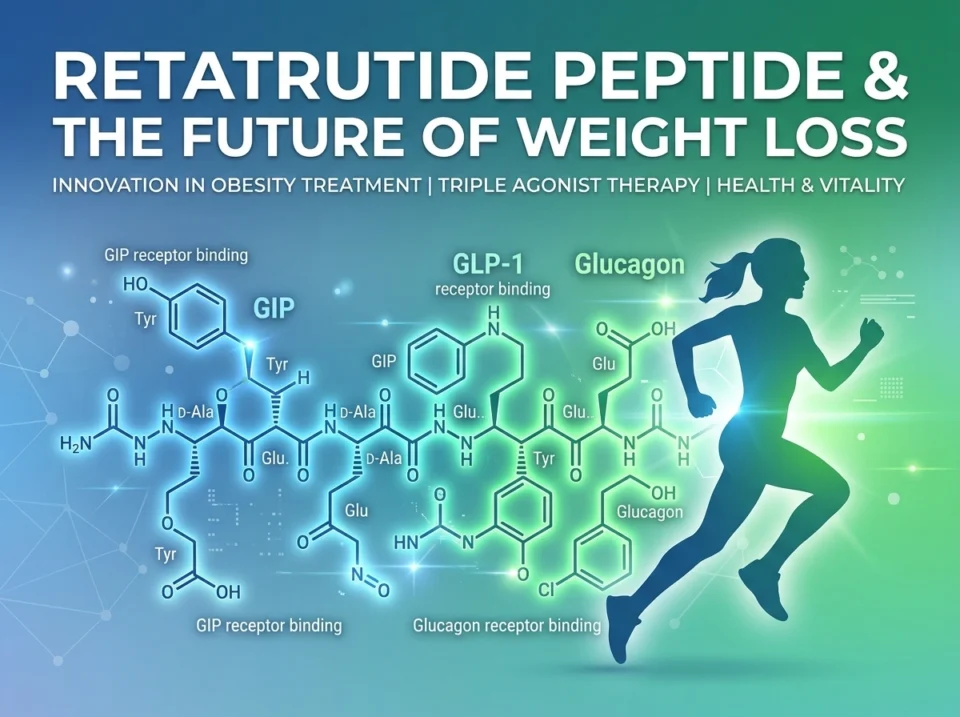
Weight loss medicine has shifted dramatically over the past few years. What used to mean strict diets, intense workouts, and limited drug options has now grown into a science-driven field powered by peptide therapies. Drugs like semaglutide and tirzepatide proved that targeting gut hormones could help people lose significant weight. Now a newer compound is generating even bigger headlines.
That compound is retatrutide. Early data suggests it may outperform every weight loss drug currently on the market. In this guide, you’ll learn what retatrutide is, how it works, why scientists are calling it a breakthrough, what the clinical trials show, and what its future might look like in obesity treatment.
Here’s the short version before we dig in:
- Retatrutide targets three hormone receptors instead of one or two.
- Trial participants have seen some of the largest weight reductions ever recorded for a drug.
- It’s still investigational, so it isn’t approved for general use yet.
What Is Retatrutide?
Retatrutide is an experimental injectable peptide developed by Eli Lilly. It belongs to a class of medications known as incretin-based therapies, which mimic natural hormones that control appetite, blood sugar, and metabolism.
Where most weight loss peptides act on one or two hormone pathways, retatrutide acts on three at once. This is why researchers often describe it as a “triple agonist.” That extra mechanism is the main reason it has attracted so much attention.
For people exploring peptide-based treatment options, products such as the retatrutide peptide are increasingly discussed across research and wellness communities. Still, it’s important to understand the science before forming any expectations.
How Does Retatrutide Work? The Triple Agonist Mechanism
The power of retatrutide comes from its ability to activate three different receptors that all influence weight and metabolism. Let’s break each one down.
GLP-1 Receptor
GLP-1 (glucagon-like peptide-1) is the hormone behind drugs like semaglutide. When activated, it:
- Reduces appetite
- Slows how fast your stomach empties
- Helps you feel full longer
- Supports better blood sugar control
This pathway alone has helped millions of people reduce food intake without constant hunger.
GIP Receptor
GIP (glucose-dependent insulinotropic polypeptide) is the second target. It works alongside GLP-1 and may:
- Improve insulin sensitivity
- Support fat metabolism
- Enhance the appetite-reducing effects of GLP-1
Tirzepatide combines GLP-1 and GIP, which is part of why it produced stronger results than single-agonist drugs.
Glucagon Receptor
This is where retatrutide stands apart. The glucagon receptor influences how your body burns energy. Activating it can:
- Increase energy expenditure (you burn more calories)
- Help mobilize stored fat
- Support liver fat reduction
By combining appetite control with a higher metabolic burn, retatrutide attacks weight from multiple directions at once.
Mini-takeaway: Most weight loss drugs reduce how much you eat. Retatrutide reduces intake and may increase how much energy you burn.
Why Retatrutide Is Considered a Breakthrough
To understand the excitement, compare it to what came before.
Semaglutide (Wegovy, Ozempic) helped patients lose roughly 15% of their body weight in trials. That was groundbreaking at the time. Tirzepatide (Mounjaro, Zepbound) pushed results closer to 20–22%.
Retatrutide’s early trial data suggests weight loss that could reach or exceed 24% at higher doses over about a year. Numbers like these were once only associated with bariatric surgery, not a weekly injection.
Here’s why that matters:
- Bigger results: It may help people who didn’t respond well to other drugs.
- Metabolic benefits: The glucagon pathway may improve liver health and energy use.
- Broader potential: Researchers are studying it for obesity, type 2 diabetes, and fatty liver disease.
In short, retatrutide isn’t just a slightly better version of existing drugs. Its three-receptor design represents a genuine shift in how these medications are built.
Clinical Trial Results and Scientific Backing
The most discussed data comes from a Phase 2 trial published in major medical journals. Participants with obesity received different doses of retatrutide over 48 weeks.
Key findings included:
- Patients on the highest dose lost around 24% of their body weight on average.
- Some individuals lost more than 30%.
- Improvements were also seen in blood sugar markers and liver fat levels.
- Weight loss had not fully plateaued by the end of the study, suggesting more potential over longer use.
These results placed retatrutide among the most effective weight loss compounds ever tested in humans. Because of this, it has moved into larger Phase 3 trials, which are needed before any approval can happen.
It’s worth stressing that Phase 2 results, while impressive, are early. Larger studies confirm both effectiveness and long-term safety.
Potential Benefits of Retatrutide
Based on current research, the possible benefits include:
- Significant weight reduction beyond what current drugs offer
- Improved blood sugar control, useful for people with type 2 diabetes
- Reduced liver fat, which may help with non-alcoholic fatty liver disease
- Better metabolic health markers, including cholesterol and blood pressure in some cases
- Higher energy expenditure, thanks to the glucagon receptor activity
For many people who struggle with obesity-related conditions, these combined effects could be life-changing.
Potential Side Effects and Safety Considerations
No medication is without trade-offs, and retatrutide follows the pattern of other incretin drugs. Reported side effects in trials were mostly gastrointestinal, especially at higher doses.
Common side effects include:
- Nausea
- Vomiting
- Diarrhea
- Constipation
- Reduced appetite (which is partly the point, but can be uncomfortable)
These effects were often mild to moderate and tended to ease as the body adjusted. Researchers typically start patients on a low dose and slowly increase it to limit discomfort.
There are still open questions. Long-term safety, effects after stopping the drug, and how it performs across different populations are all being studied. This is exactly why approval requires more data.
Important: Retatrutide is not yet approved for general medical use in most regions. Anyone considering peptide therapy should consult a qualified healthcare professional rather than self-treating.
The Future Outlook for Retatrutide in Obesity Medicine
So where is this all heading?
If Phase 3 trials confirm the early results, retatrutide could become one of the most powerful tools in obesity treatment. A few trends seem likely:
- A new performance standard. Future drugs may be measured against retatrutide rather than semaglutide.
- Wider treatment use. Beyond weight loss, it may play a role in diabetes and liver disease management.
- Personalized dosing. Doctors may tailor doses to balance results with side effects.
- Reduced reliance on surgery. For some patients, medication may achieve results once reserved for bariatric procedures.
The bigger picture is that obesity is finally being treated as a complex metabolic condition rather than a willpower issue. Triple agonists like retatrutide reinforce that shift.
Final Thoughts
Retatrutide represents one of the most exciting developments in weight loss science to date. By targeting GLP-1, GIP, and glucagon receptors at the same time, it tackles appetite, blood sugar, and energy burn together, an approach that helped trial participants achieve weight loss once thought impossible without surgery.
That said, it remains investigational. The smart next steps are simple:
- Stay informed by following credible clinical updates.
- Talk to a healthcare provider before considering any peptide therapy.
- Focus on the fundamentals, like nutrition and movement, which still support any treatment plan.
Retatrutide may well reshape the future of obesity medicine. The question now is how quickly the research catches up to the excitement, and how many people it could ultimately help.
What part of this breakthrough are you most curious about?
