
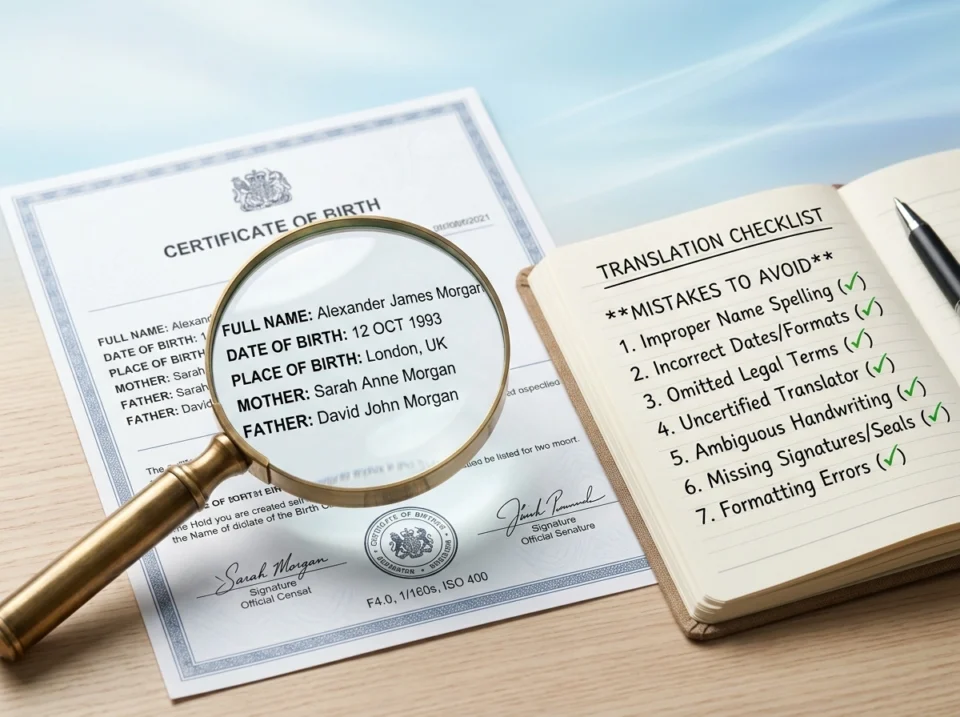
Navigating the paperwork for a visa application, university enrollment, or a legal proceeding can feel overwhelming. Among the mountain of required documents, your birth certificate often takes center stage. If that document is in a language different from the official language of your destination country, you will need a certified translation.
Many people assume this process is as simple as handing the document to a bilingual friend or running it through a free online tool. However, government agencies and official institutions have strict guidelines for how vital records must be translated and presented. Failing to follow these rules can lead to rejected applications, missed deadlines, and lost fees.
To help you secure a flawless translation on your first try, you need to know exactly what pitfalls to watch out for. Below, we explore the most common errors people make when seeking out these vital services and how you can ensure your documents are handled correctly.
Focusing solely on location over certification
When people need a document translated quickly, their first instinct is often to open a search engine and look for a local storefront. While typing birth certificate translation near me into your browser is a logical starting point, prioritizing physical proximity over professional certification is a major misstep.
A local translation agency might be a short drive away, but that does not guarantee they hold the necessary credentials to provide a certified translation. Official entities require translations to include a signed statement attesting to the accuracy and completeness of the document. If your local shop cannot provide this specific certification, your document will be useless for official purposes.
Furthermore, limiting your search to your immediate geographic area severely restricts your options. Top-tier translation agencies operate online, offering secure document uploads and nationwide shipping for hard copies. These online providers often have larger teams of specialized linguists, ensuring they can handle specific dialects and complex formatting far better than a generalist agency down the street.
Overlooking the specific requirements of the requesting agency
Every institution has its own set of rules regarding translated documents. Assuming that a single translation format will satisfy every organization is a costly mistake. The United States Citizenship and Immigration Services (USCIS), for example, has very rigid criteria. They require a fully certified translation, meaning the translator must certify in writing that they are competent to translate the foreign language into English and that the translation is accurate.
Other institutions might ask for additional layers of authentication. A university admissions office could require a notarized translation, where a Notary Public verifies the identity of the person signing the certification statement. If you are submitting your birth certificate to a foreign government, you might even need an Apostille to authenticate the document for international use.
Before you hire a translator, thoroughly review the submission guidelines provided by the requesting agency. Note whether they need a simple certified translation, a notarized copy, or physical hard copies mailed directly from the translation agency. Passing these exact requirements along to your chosen translation service will save you from devastating rejections.
Choosing the cheapest option over quality and accuracy
We all love finding a good deal, but vital record translation is not the place to cut corners. If you stumble upon a service offering to translate your birth certificate for five dollars, you should immediately be suspicious. Rock-bottom prices usually indicate that the agency relies heavily on automated machine translation software or employs unqualified, unvetted staff.
Birth certificates contain critical information, including full legal names, exact dates, and specific geographic locations. A machine translation tool can easily misinterpret a handwritten name or mistranslate a highly localized geographic region. Even a single misspelled name or incorrect date of birth can cause an immigration official to flag your application for discrepancies.
Professional translation services typically charge a standard per-page rate. For instance, reputable agencies often charge around $29.95 per page for high-quality, certified translations. This fee covers the expertise of a human translator who understands the nuances of the language, the formatting of the official document, and the rigorous quality assurance checks needed to guarantee absolute accuracy. Investing a little more upfront protects you from the massive costs of a rejected immigration petition or delayed university acceptance.
Not verifying the translator’s credentials or ATA membership
Anyone can build a sleek website and claim to be a professional translator. Trusting a company without verifying their actual credentials leaves you vulnerable to amateur work. You need to ensure that the people handling your most important documents are recognized professionals in their field.
One of the strongest indicators of a reputable translation service in the United States is membership in the American Translators Association (ATA). The ATA is a professional organization that promotes high standards in the translation and interpreting professions. While a translator does not strictly need to be ATA-certified to provide a valid translation for USCIS, working with an ATA corporate member or certified translator provides a massive layer of security.
When evaluating an agency, ask about their hiring practices. Do they use native speakers? Do their translators have specific experience with legal and official documents? A trustworthy company will be highly transparent about the qualifications of their linguists. If an agency dodges questions about their credentials, take your business elsewhere.
Failing to account for turnaround time and deadlines
Government deadlines are notoriously strict. If your visa application is due on a Tuesday, submitting your translated birth certificate on a Wednesday means your application will be denied. A common error applicants make is waiting until the last possible minute to secure a translation service.
Standard turnaround times for a one-to-three-page birth certificate usually hover around 24 to 48 hours. However, if your document features complex handwritten text, faded ink, or rare dialects, the translator will need extra time to ensure total accuracy. Additionally, if you require a physical, notarized copy mailed to your home, you must factor in postal transit times.
Always plan ahead. If you find yourself in a sudden time crunch, look for agencies that offer expedited processing. Many professional services can accelerate their workflow, delivering digital copies in as little as 12 hours for an additional fee. Communicate your deadlines clearly to the translation agency before you submit payment to guarantee they can meet your schedule.
Ignoring data privacy and security of sensitive documents
Your birth certificate is a foundational identity document. It contains your parents’ full names, your exact date and place of birth, and official registration numbers. In the wrong hands, this information can easily be used for identity theft and financial fraud. Unfortunately, many people casually email these sensitive documents to unvetted freelancers without a second thought regarding digital security.
Professional translation agencies take data privacy seriously. They utilize secure, encrypted portals for document uploads rather than relying on standard email attachments. Furthermore, reputable companies implement strict confidentiality agreements with all their translators and staff members, ensuring your personal data is never shared, sold, or stored insecurely.
Before uploading your vital records to any platform, check the company’s privacy policy. Look for clear statements about how long they retain your documents after the translation is complete and what encryption methods they use to protect your data in transit. Protecting your identity is just as important as securing an accurate translation.
How to properly vet a professional translation service
Finding a reliable partner for your translation needs requires a bit of straightforward research. Start by checking independent customer reviews on third-party platforms like Trustpilot or Google Reviews. Look for patterns in the feedback. Consistent praise for accuracy, speed, and customer service is a great sign, whereas repeated complaints about hidden fees or rejected documents should serve as a massive red flag.
Next, evaluate their customer support. A professional agency will have responsive communication channels, including phone support, email, and live chat. Reach out to them with a question about your specific requirements. Their ability to provide a clear, knowledgeable, and prompt answer will tell you a lot about how they conduct business.
Finally, insist on transparent pricing. The best translation companies offer clear, upfront quotes based on the page count and language pair. They will clearly list any optional add-ons, such as notarization, apostille services, or physical mailing fees. You should know exactly what your final bill will be before the translation work even begins.
Final steps for a flawless document submission
Securing an accurate, certified translation of your birth certificate is a vital step in achieving your global goals, whether that means relocating to a new country, studying abroad, or settling legal matters. By avoiding the common traps of prioritizing proximity, hunting for unrealistic bargains, and ignoring security protocols, you protect yourself from immense stress and financial loss.
Always take the time to review the specific guidelines of the institution requesting your document. Partner with a transparent, credentialed translation agency that values your privacy and understands the critical nature of vital records. With the right team behind you, you can submit your paperwork with total confidence, knowing your documents speak clearly and accurately across any language barrier.
