
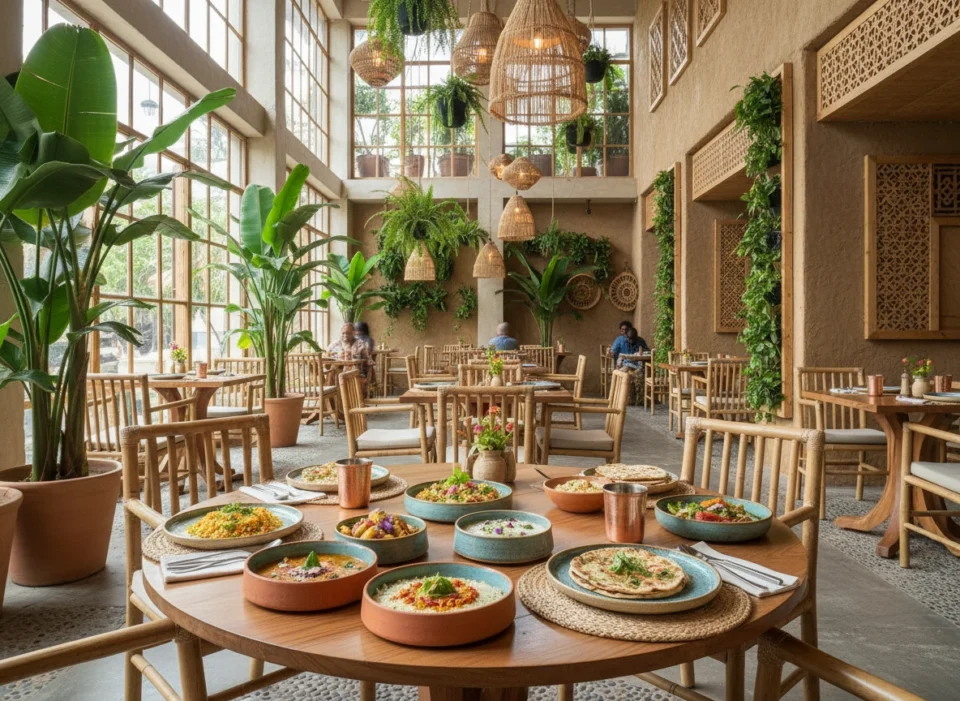
Imagine walking into a restaurant where the walls are made of recycled tetra packs, the menu is seasonal based on what local farmers harvested that morning, and the waste bin is virtually empty because leftovers are composted on-site. This isn’t a scene from a futuristic sci-fi novel. It is the emerging reality of dining in India.
The Indian food service industry is undergoing a quiet but powerful transformation. Sustainability is moving from a niche marketing buzzword to a core operational philosophy. As climate change awareness seeps into the collective consciousness, Indian diners are beginning to ask harder questions about where their food comes from and the footprint it leaves behind.
This article explores how eco-conscious dining is reshaping India’s culinary landscape, examining the drivers of this shift, the challenges restaurateurs face, and the innovative practices setting the standard for the future.
Beyond the Buzzword: What Does Eco-Conscious Dining Mean in India?
Sustainability in the Indian context has deep cultural roots. Traditional Indian cooking has historically been low-waste, focused on seasonal produce, and deeply connected to local agriculture. However, rapid urbanization and the rise of fast-food culture drifted the industry away from these roots. The modern eco-conscious movement is essentially a return to these principles, supercharged by modern technology and global awareness.
Today, an eco-conscious restaurant in India isn’t just about banning plastic straws. It involves a holistic approach that includes:
- Sourcing: Prioritizing local, organic, and seasonal ingredients to reduce food miles.
- Operations: Minimizing energy and water consumption.
- Waste Management: Implementing strict zero-waste protocols, composting, and recycling.
- Architecture: Using sustainable building materials and energy-efficient designs.
Key Drivers Shaping the Future
Why is this shift happening now? Several converging factors are pushing the Indian restaurant industry toward a greener future.
1. The Conscious Consumer
A new generation of Indian diners, particularly Millennials and Gen Z, is voting with their wallets. They are more likely to support businesses that align with their values. A study by the National Restaurant Association of India (NRAI) suggests a growing preference for brands that demonstrate social and environmental responsibility. Customers are no longer just buying a meal; they are buying into an ethical ecosystem.
2. Economic Efficiency
Contrary to the belief that sustainability is expensive, many eco-friendly practices lead to long-term cost savings. Energy-efficient kitchen equipment, solar power installations, and waste reduction strategies directly impact the bottom line. For instance, reducing food waste means purchasing less raw material for the same output, improving profit margins in an industry known for being tight on cash flow.
3. Policy and Regulation
The Indian government has started tightening regulations around single-use plastics and waste management. Initiatives like the Swachh Bharat Abhiyan and stricter municipal guidelines for bulk waste generators are forcing restaurants to rethink their disposal methods. This regulatory pressure acts as a catalyst, pushing even reluctant owners to adopt better practices.
Trends Defining the Sustainable Plate
The future of eco-conscious restaurants in India is being built on several key pillars. These trends are moving from the fringes to the mainstream.
The Farm-to-Table Revolution
The concept of “Farm-to-Table” is flourishing. Restaurants are forging direct relationships with farmers, bypassing intermediaries. This ensures farmers get fair prices and chefs get the freshest produce. Establishments like The Table in Mumbai or Forage in Bangalore are pioneers in this space, often growing their own produce or sourcing from within a 100km radius. This hyper-local approach drastically cuts carbon emissions associated with transport.
The Rise of Plant-Based Menus
While India has a massive vegetarian population, the modern “plant-based” movement is distinct. It targets environmental sustainability specifically, aiming to reduce the heavy carbon footprint of meat and dairy industries. We are seeing a surge in restaurants offering vegan alternatives that mimic the taste and texture of meat using jackfruit, soy, or chickpeas, catering to eco-conscious meat-eaters looking to reduce their impact.
Zero-Waste Kitchens
Zero-waste cooking is perhaps the most challenging yet rewarding trend. It requires a fundamental shift in how chefs view ingredients. It’s about using the carrot tops for pesto, potato peels for chips, and composting whatever truly cannot be used. Sante Spa Cuisine, with outlets in multiple cities, utilizes eco-friendly crockery and cutlery made from neem wood and focuses heavily on minimizing kitchen waste.
Challenges on the Road to Sustainability
Despite the optimism, the path to a fully sustainable restaurant industry in India is paved with obstacles.
Supply Chain Fragmentation
Sourcing consistent, high-quality organic produce remains a nightmare for many chefs. The supply chain for organic goods is often fragmented and unreliable compared to conventional produce. A restaurant cannot print a menu if they aren’t sure the ingredients will arrive.
Higher Initial Costs
Transitioning to solar energy, installing water treatment plants, or sourcing biodegradable packaging requires significant upfront capital. For small, independent restaurant owners recovering from the economic shocks of recent years, this investment can be prohibitive.
Consumer Price Sensitivity
While consumers say they want sustainability, the Indian market is highly price-sensitive. Organic ingredients and eco-friendly packaging cost more, and passing that cost onto the customer is risky. The challenge lies in balancing ethical operations with competitive pricing.
Technology: The Enabler of Green Dining
Technology plays a crucial role in bridging the gap between intention and execution.
- Inventory Management Software: AI-driven tools help restaurants predict demand accurately, drastically reducing food spoilage and over-ordering.
- Smart Energy Systems: IoT (Internet of Things) devices monitor energy usage in real-time, optimizing HVAC and refrigeration systems to cut electricity bills and carbon footprints.
- Traceability Apps: Blockchain technology is beginning to allow customers to scan a QR code on their menu and trace the journey of their vegetables from the farm to their plate, building immense trust.
Case Studies: Pioneers Leading the Way
Several Indian establishments serve as beacons for what is possible.
- Gaa (Bangkok/Indian influence): While based in Bangkok, Chef Garima Arora’s philosophy deeply influences Indian fine dining. Her focus on using fermentation to utilize every part of an ingredient showcases how zero-waste can elevate flavor.
- The Bombay Canteen (Mumbai): They have championed the use of indigenous, forgotten Indian ingredients. By creating demand for local, seasonal produce like moras bhaji or ponkh, they support biodiversity and local farming communities.
- Greenr Cafe (Delhi/Mumbai): As one of the first to champion plant-based proteins in a modern cafe setting, they have normalized veganism for the urban youth, proving that sustainable food can be crave-worthy and hip.
Actionable Steps for Restaurant Owners
If you are a stakeholder in the food and beverage industry, waiting for sustainability to become mandatory is a losing strategy. Here is how you can start future-proofing your business today:
- Audit Your Waste: rigorous waste audit for one week. Separate pre-consumer waste (peels, trimmings) from post-consumer waste (leftovers). You cannot manage what you do not measure.
- Start Small with Sourcing: You don’t need to overhaul your entire menu overnight. Commit to sourcing 20% of your key ingredients from local farmers within a 100km radius.
- Ditch Single-Use Plastic: This is the lowest hanging fruit. Replace plastic straws, stirrers, and takeaway containers with bagasse, bamboo, or paper alternatives.
- Educate Your Staff: Your team needs to understand the “why” behind the “what.” When servers understand sustainability, they can sell the story to the customers effectively.
- Communicate Your Efforts: Don’t be shy about your green initiatives. Use social media to share your composting journey or your relationship with a local farmer. Customers appreciate transparency and effort, even if it isn’t perfect.
Conclusion
The future of eco-conscious restaurants in India is not a distant dream; it is currently under construction. It is a future where “luxury” is redefined not by imported caviar, but by the purity of locally grown spinach. It is a future where profitability and planet-friendliness are not enemies, but partners.
As technology improves supply chains and consumers become increasingly vocal about their environmental expectations, the Indian restaurant industry stands at a precipice. Those who embrace sustainability now will not only be saving the planet—they will be securing their place in the market for decades to come. The table is set for a greener revolution; it is time to dig in.
Please visit this website for more info.
