
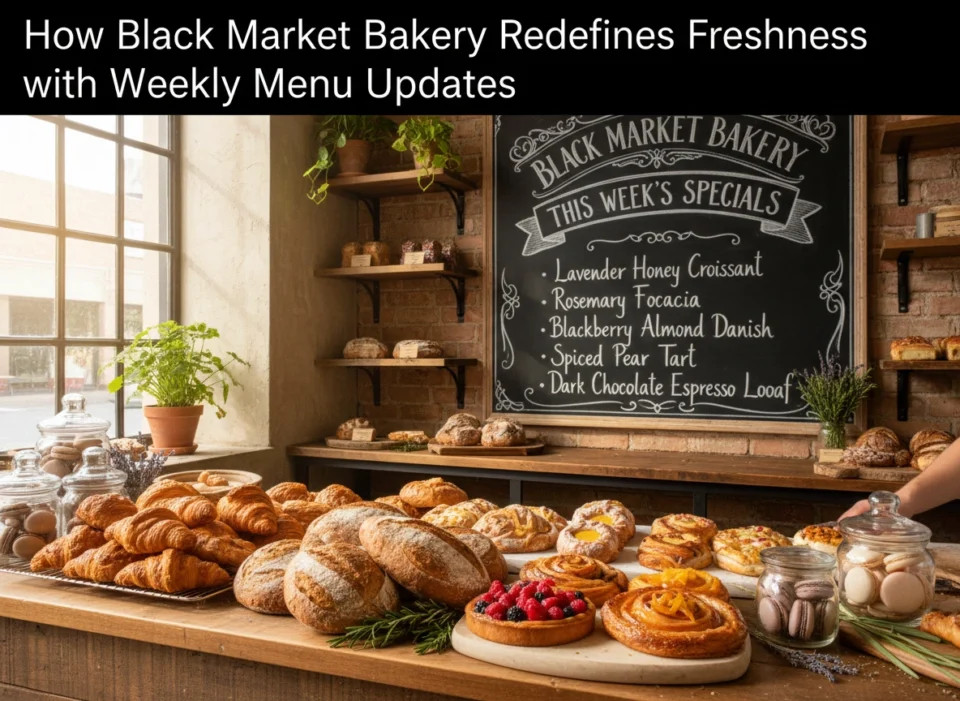
Freshness is a term often tossed around in the culinary world, usually referring to ingredients harvested recently or bread baked this morning. However, true freshness extends beyond just the timestamps on produce. It encompasses innovation, variety, and the excitement of the unknown. Black Market Bakery has taken this concept to heart, redefining what it means to be a “fresh” bakery not just through their ovens, but through a strategic, ever-evolving weekly menu. By refusing to let their offerings stagnate, they have created a dynamic business model that keeps customers engaged, ingredients at their peak, and the local community buzzing with anticipation.
This article explores how Black Market Bakery leverages weekly menu updates to maintain an unparalleled standard of quality. We will examine the operational strategy behind this approach, how it deepens customer loyalty, and the tangible benefits it brings to the broader community.
The Philosophy of Constant Evolution
Most bakeries operate on a static model. You have your staples—croissants, sourdough loaves, chocolate chip cookies—that remain unchanged for years. While there is comfort in consistency, there is also the risk of monotony. Black Market Bakery challenges this norm by treating their menu as a living, breathing entity.
Beyond the Daily Bake
At the core of their philosophy is the belief that “fresh” means “current.” A menu that changes weekly ensures that the bakery is always in sync with the micro-seasons of local agriculture. When strawberries are at their sweetest in late spring, they aren’t just an garnish; they become the star of a new tart or Danish. When autumn brings a chill, the menu shifts to warm spices and heavier grains.
This approach prevents menu fatigue. Customers don’t just come in for “the usual”; they come in to see “what’s new.” This subtle psychological shift transforms a routine coffee run into a mini-adventure of discovery.
The Operational Challenge as a Strength
Changing a menu weekly is a logistical tightrope walk. It requires immense coordination between the head bakers, supply chain managers, and front-of-house staff.
- Inventory Management: Instead of bulk ordering flour and sugar for the same six recipes, the procurement team must be agile, sourcing specific ingredients for limited runs. This reduces waste significantly, as ingredients are bought for specific production targets rather than speculative long-term storage.
- Staff Training: Weekly updates mean the baking team is constantly learning new techniques and recipes. This fosters a culture of high skill and adaptability, ensuring that the staff is deeply knowledgeable about the craft rather than just memorizing a routine.
Innovative Practices in Menu Curation
The “Weekly Menu” isn’t just a random assortment of goods; it is a curated collection designed to tell a story or highlight a specific flavor profile. Black Market Bakery’s innovation lies in how they structure these updates.
Thematic Consistency
Often, a week’s menu will revolve around a theme. One week might focus on “Citrus Explosions,” featuring lemon lavender scones, blood orange galettes, and lime curd cruffins. Another week might be “Savory Comforts,” highlighting bacon cheddar scones, jalapeño poppers wrapped in brioche, and rustic pot pies.
By theming their weeks, they create a focused marketing message that cuts through the noise. It gives customers a concrete reason to visit this specific week. If you love citrus, you know you have a limited window to indulge, creating a natural sense of urgency—a powerful driver in retail.
The “Black Market” Twist
True to their name, the bakery often infuses a sense of rebellion or unconventionality into these updates. They aren’t afraid to mix sweet and savory in unexpected ways or revive forgotten vintage recipes with a modern twist. For example, a standard croissant might be reimagined with a filling of goat cheese and fig jam one week, and then strictly dark chocolate and sea salt the next. This willingness to experiment defines their brand voice: bold, unafraid, and uncompromisingly high-quality.
Customer Engagement: The Anticipation Economy
In the digital age, engagement is currency. Black Market Bakery uses their weekly menu updates as a primary engine for social media interaction and customer retention.
Social Media as a Menu Board
Their Instagram and Facebook feeds serve as dynamic menu boards. Early in the week, teasers for upcoming items begin to appear. High-quality photography showcases the glistening glaze on a new donut or the flaky layers of a special puff pastry.
This strategy builds anticipation. By the time the menu launches on Monday or Tuesday, followers are already tagging friends and planning their visits. The comment sections become forums for feedback, where customers vote on which items should return or suggest new flavor combinations. This direct line of communication makes patrons feel like active participants in the bakery’s creative process.
The “Get It While It’s Hot” Mentality
Scarcity is a powerful motivator. Knowing that a specific item—like the “Dark Side” chocolate cake or a seasonal pumpkin cheesecake croissant—might disappear by Sunday encourages immediate action. This drives consistent foot traffic throughout the week, smoothing out the typical lulls that retail businesses face between weekends.
Customer testimonials frequently mention this urgency. Sarah J., a regular patron from the Costa Mesa location, notes, “I follow their Instagram religiously. If I see they’re doing the matcha cronuts again, I make sure to detour on my way to work. If I wait until Saturday, they’re usually sold out. It’s a fun race.”
Benefits for Business and Patrons
The weekly menu model is demanding, but the payoffs are substantial for both the business bottom line and the customer experience.
For the Business: Agility and Waste Reduction
- Inventory Control: Because the menu is planned tightly week-to-week, the bakery holds less “dead stock.” Perishable ingredients are used immediately for specific recipes, drastically reducing food waste—a major cost center in the food industry.
- Market Testing: The weekly format allows Black Market Bakery to test new concepts with low risk. If a weird flavor experiment doesn’t sell well, it’s gone in seven days, and no long-term damage is done. If it’s a hit, it can be brought back or added to a permanent “Hall of Fame” rotation.
For the Patron: Quality and Transparency
- Peak Flavor: Customers are guaranteed that what they are eating is appropriate for the season. A tomato galette tastes infinitely better in August than in January. The menu reflects this reality.
- Educational Value: Through these changes, customers learn more about baking and ingredients. They are introduced to new grains, different types of fruit, and varied baking styles, expanding their culinary palates.
Impact on the Local Community
Black Market Bakery has positioned itself not just as a shop, but as a community hub. The ever-changing menu supports this role by creating a continuous dialogue with local suppliers and neighbors.
Supporting Local Agriculture
The flexibility of a weekly menu allows the bakery to support local farmers more effectively. If a local orchard has a surplus of persimmons, Black Market Bakery can pivot quickly to incorporate them into that week’s offerings. This responsiveness supports the local agricultural economy in a way that rigid, corporate franchises cannot.
Creating a “Third Place”
Sociologists talk about the “third place”—a space that isn’t work and isn’t home, where community happens. The excitement around the new menu gives neighbors a reason to gather. It sparks conversation. “Did you try the new tart?” becomes a community icebreaker. In an era where digital isolation is common, these small, tangible interactions centered around food are vital for community health.
Conclusion
Black Market Bakery demonstrates that freshness is a multifaceted concept. It is found in the crunch of a just-baked baguette, but also in the agility of a business model that refuses to stand still. By committing to weekly menu updates, they have turned the simple act of buying bread into an engaging, dynamic experience.
For other businesses in the food and beverage sector, Black Market Bakery serves as a case study in the power of adaptation. They prove that while consistency is important, regulated novelty can be the key to long-term loyalty.
Next time you are in the neighborhood, stop by. But don’t get too attached to that specific scone you fall in love with—next week, something entirely new, and likely just as delicious, will be waiting to take its place.
Please visit website for more info.
