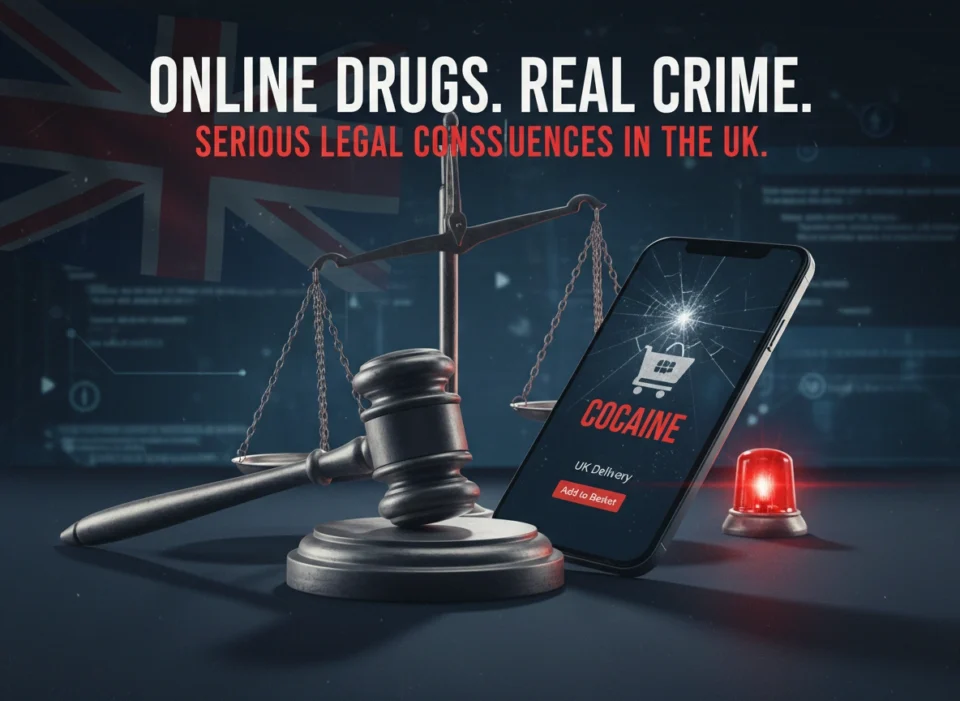
The internet has drastically changed how society operates, offering unprecedented convenience for acquiring goods and services. However, this digital shift has also opened new avenues for illicit activities. A growing number of individuals attempt to purchase illegal narcotics through digital platforms, operating under the false assumption that screens and encryption provide absolute anonymity.
This article explores the stringent legal consequences of purchasing cocaine online within the United Kingdom. We will examine the overarching framework of the Misuse of Drugs Act 1971, the severe penalties associated with Class A drugs, and the highly sophisticated methods law enforcement agencies use to track digital footprints.
The Misuse of Drugs Act 1971
To understand the penalties involved, we must first look at the foundational legislation governing controlled substances in the UK: the Misuse of Drugs Act 1971. This act divides illegal drugs into three distinct classes—A, B, and C—based on the harm they cause to the individual and society.
Cocaine is strictly categorized as a Class A controlled substance. This is the highest and most heavily penalized tier within the UK legal system, placing cocaine alongside other highly addictive substances like heroin, crack cocaine, and methamphetamine. The government maintains this classification due to the drug’s high potential for addiction, the severe health risks it poses, and the violent criminal networks associated with its production and distribution.
Because of its Class A status, any involvement with cocaine—whether it is possession, supply, or production—carries the harshest potential sentences available under British drug laws.
Understanding the Charges: Possession vs. Intent to Supply
When an individual attempts to acquire cocaine through the internet, they expose themselves to a variety of potential criminal charges. The exact nature of the charge generally depends on the quantity of the drug ordered, the circumstances of the purchase, and the intent of the buyer.
Charges of Possession
If law enforcement intercepts a package of cocaine intended for personal use, the buyer will likely face a charge of possession of a Class A drug. Under the Misuse of Drugs Act 1971, the maximum penalty for possession of a Class A substance is up to seven years in prison, an unlimited fine, or both.
While first-time offenders caught with very small amounts might receive lesser sentences, such as community orders or heavy fines, a conviction still results in a permanent criminal record. This record can devastate future career prospects, restrict international travel, and damage personal relationships.
Possession with Intent to Supply
The stakes rise astronomically if authorities believe the purchased drugs were meant for distribution. If a buyer orders a large quantity of cocaine online, prosecutors can argue that the volume exceeds what a single person could reasonably consume. In such cases, the charge escalates to “possession with intent to supply.”
The penalties for supplying or offering to supply a Class A drug are incredibly severe. A conviction can lead to a maximum sentence of life imprisonment, alongside an unlimited fine. The courts take a remarkably tough stance on supply charges, aiming to dismantle the networks that distribute harmful substances across communities.
Importation Charges and Border Force Interceptions
One of the most overlooked legal hazards of buying cocaine online is the risk of importation charges. The internet connects buyers with sellers across the globe. Consequently, an online purchase often involves crossing international borders.
When an individual orders a controlled substance from an international vendor, they are not just violating the Misuse of Drugs Act; they are also violating the Customs and Excise Management Act 1979. The UK Border Force employs highly advanced detection methods, including sniffer dogs, X-ray scanners, and intelligence-led profiling, to intercept illegal packages entering the country.
If a package is intercepted at the border, the buyer faces charges of importing a controlled Class A drug. Like the intent to supply, importation of a Class A substance carries a maximum penalty of life imprisonment. Law enforcement agencies frequently track intercepted packages to the buyer’s address through “controlled deliveries,” allowing them to arrest the individual the moment they accept the parcel.
The Myth of Online Anonymity and Digital Footprints
A primary driver behind the online drug trade is the illusion of anonymity. Buyers often turn to the dark web, encrypted messaging applications, and cryptocurrency transactions to hide their identities. For example, a misguided user might search for a platform claiming they can Buy Cocaine Online UK safely, completely unaware of the massive digital footprint they are leaving behind.
The Vulnerability of the Dark Web
While the dark web utilizes specialized routing to obscure IP addresses, it is far from an impenetrable fortress. International law enforcement agencies, including the UK’s National Crime Agency (NCA), regularly infiltrate and dismantle these hidden marketplaces. When a marketplace is seized, authorities gain access to its servers. This includes buyer databases, private messages, and transaction histories.
Even if a buyer believes their transaction was anonymous, server logs seized months or years later can lead directly to their doorstep.
Following the Financial Trail
Cryptocurrencies like Bitcoin and Monero are the standard currencies for online illicit purchases. Many people mistakenly believe these digital currencies are completely untraceable. In reality, most cryptocurrencies operate on a public ledger called a blockchain.
Every transaction is recorded permanently. Cybercrime units employ specialized blockchain analysis tools to trace funds from a dark web vendor’s wallet back to the exchange where the buyer initially purchased the cryptocurrency. Since legitimate exchanges require strict Know Your Customer (KYC) identity verification, law enforcement can easily link a supposedly anonymous transaction to a real-world identity.
Digital Forensics and Device Seizure
If authorities suspect an individual of purchasing illegal drugs online, they can secure a warrant to search the person’s home and seize their electronic devices. Digital forensics experts can recover a wealth of incriminating evidence from computers and smartphones, even if the user has attempted to delete their browsing history or uninstall encrypted applications.
Evidence such as search queries, saved PGP encryption keys, cryptocurrency wallet files, and shipping tracking numbers can all be used to build a robust legal case against the buyer.
The Broader Ramifications of a Conviction
Beyond the immediate threat of imprisonment and fines, a conviction for a Class A drug offense carries lifelong secondary consequences.
- Employment Restrictions: A criminal record for drug offenses will appear on standard and enhanced Disclosure and Barring Service (DBS) checks. This immediately disqualifies the individual from working in finance, education, healthcare, law, and many corporate environments.
- Travel Bans: Many countries, most notably the United States and Australia, enforce strict entry policies regarding foreign nationals with drug convictions. A conviction for buying cocaine will likely result in a permanent ban from entering these nations.
- Asset Confiscation: Under the Proceeds of Crime Act 2002 (POCA), authorities have the power to seize assets they believe were funded by criminal activity. If an individual is heavily involved in online drug networks, they risk losing their home, vehicles, and bank accounts.
Conclusion
The decision to purchase cocaine online in the UK carries monumental legal risks that far outweigh any perceived convenience. The UK government and law enforcement agencies take a zero-tolerance approach to Class A controlled substances. Through the powers granted by the Misuse of Drugs Act 1971 and customs legislation, the courts routinely hand down severe prison sentences for possession, supply, and importation.
Furthermore, the belief that digital transactions offer protection is a dangerous fallacy. Through blockchain analysis, postal interceptions, and the infiltration of dark web markets, law enforcement actively uncovers the identities of online buyers. Anyone attempting to navigate this illicit digital landscape exposes themselves to aggressive prosecution, substantial prison time, and permanent damage to their future.
