
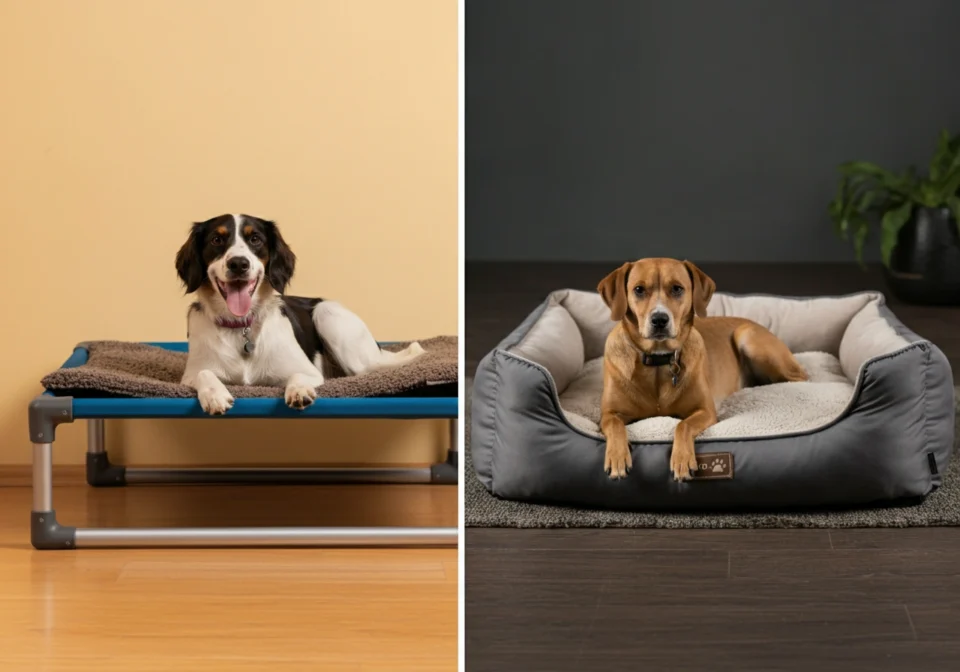
Choosing the right bed for your dog is more than just picking a comfy spot for them to nap. It’s an investment in their health, comfort, and overall well-being. With so many options available, the decision can feel overwhelming. Two of the most popular categories are elevated dog beds and traditional, pillow-style beds. While both provide a place for your pet to rest, they offer vastly different benefits.
This guide will break down the key differences between elevated and traditional dog beds. We will explore factors like comfort, hygiene, durability, and design to help you make an informed choice that suits your dog’s specific needs and your lifestyle.
What is an Elevated Dog Bed?
An elevated dog bed, sometimes called a raised or cot-style bed, features a frame that lifts a fabric sleeping surface off the ground. These frames are typically made from materials like metal, plastic, or wood, while the sleeping surface is a taut, breathable mesh or durable canvas. The design allows for complete air circulation around your dog, a key feature that sets it apart from traditional beds.
What is a Traditional Dog Bed?
A traditional dog bed is what most people picture when they think of a pet bed. These are essentially large cushions or pillows that lie directly on the floor. They come in an endless variety of shapes, sizes, and materials, from simple mats to luxurious, memory foam-filled bolsters. The primary focus of a traditional bed is to provide plush, soft cushioning.
Key Differences: A Head-to-Head Comparison
When deciding between an elevated and a traditional bed, it’s helpful to compare them across several important categories.
Comfort and Support
A dog’s comfort is paramount. Both bed types address this, but in different ways.
Traditional Beds: These beds excel at providing a soft, plush surface. The thick padding can feel cozy and inviting, especially for dogs who love to nest and burrow. High-quality orthopedic versions often use memory foam, which conforms to the dog’s body, relieving pressure on joints and providing excellent support for senior dogs or those with arthritis. However, over time, the filling can compress, leading to lumps and uneven support.
Elevated Beds: An elevated Hundeseng offers firm, even support across the entire body. The taut fabric prevents sinking and ensures that your dog’s weight is distributed evenly, which can be beneficial for joint health. This consistent support doesn’t degrade over time like the filling in a traditional bed might. For dogs recovering from surgery or those with orthopedic issues, this firm surface can prevent them from struggling to get up from a soft, sinking cushion. The raised design also keeps them off cold, hard floors in the winter and allows for cooling airflow in the summer.
Hygiene and Cleanliness
Keeping your dog’s sleeping area clean is crucial for their health and for maintaining a fresh-smelling home.
Traditional Beds: Cleaning a traditional dog bed can be a chore. Many have removable covers that are machine washable, but the inner cushion often absorbs odors, drool, and dander. Some beds are not machine washable at all, making deep cleaning nearly impossible. The plush fabric can also become a breeding ground for dust mites, fleas, and other allergens, which can be a problem for both pets and their owners.
Elevated Beds: This is where elevated beds truly shine. The mesh or canvas surface is non-absorbent and easy to clean. Most messes can be wiped away with a damp cloth or hosed off outdoors. Since the material is breathable and doesn’t hold moisture, it dries quickly and is resistant to mold, mildew, and odors. The lack of dense stuffing means there is nowhere for fleas, mites, or allergens to hide, making it a far more hygienic option.
Durability and Longevity
Dogs can be tough on their belongings, so a bed needs to be able to withstand some wear and tear.
Traditional Beds: The lifespan of a traditional bed varies greatly depending on its quality and your dog’s habits. Dogs that like to chew or “dig” before lying down can quickly destroy a plush bed, tearing the fabric and pulling out the stuffing. Even with normal use, the filling can break down, causing the bed to become lumpy and unsupportive. You may find yourself replacing a traditional bed every year or two.
Elevated Beds: Built with sturdy frames and tough, tear-resistant fabric, elevated beds are designed for durability. They are an excellent choice for “destructive” dogs, as there is no stuffing to pull out and the tight fabric is difficult to chew. The robust construction means these beds often last for many years, making them a cost-effective choice in the long run. The frames can withstand significant weight, and many models have replaceable fabric surfaces, so you don’t have to buy a whole new bed if the fabric eventually wears out.
Temperature Regulation
A dog’s ability to stay cool or warm can significantly impact the quality of their sleep.
Traditional Beds: Plush beds are excellent for retaining heat. This can be a major advantage in colder climates or for dogs that get chilly easily, like greyhounds or older pets. However, this same quality can be a disadvantage in the summer. The thick padding can cause a dog to overheat, leading to restless sleep as they move to the cool floor and back.
Elevated Beds: The standout feature of an elevated bed is its 360-degree airflow. Raising the bed off the floor allows air to circulate underneath, keeping your dog cool and comfortable in warm weather. This makes it an ideal choice for hot climates or for long-haired breeds that are prone to overheating. In the winter, it serves the opposite purpose by lifting your dog off cold, drafty floors.
Which Bed is Right for Your Dog?
The best choice depends on your dog’s age, breed, health, and habits, as well as your environment.
Choose an elevated bed if:
- You live in a warm climate.
- Your dog is a heavy chewer or tends to destroy beds.
- Hygiene and ease of cleaning are top priorities for you.
- Your dog has allergies or you want to minimize dust mites and dander.
- You need a durable, long-lasting bed for outdoor or kennel use.
- Your dog is older and needs firm, even support to help them stand up easily.
Choose a traditional bed if:
- Your dog loves to burrow, nest, and feel enveloped in softness.
- You live in a cold climate and your dog gets chilled easily.
- Your dog has severe arthritis or joint pain and benefits from the cushioning of orthopedic memory foam.
- Aesthetics are a high priority, and you want a bed that matches your home decor with soft fabrics and patterns.
Conclusion: Making the Final Decision
Both elevated and traditional dog beds offer unique advantages. Traditional beds provide unparalleled softness and a sense of security for dogs that love to nest. High-quality orthopedic models offer excellent, body-contouring support. However, they can be difficult to clean, may harbor allergens, and are less durable against chewing.
Elevated beds, on the other hand, are champions of durability, hygiene, and temperature regulation. Their firm, supportive surface is great for joint health, and their easy-to-clean design makes them a practical choice for any pet owner. While they don’t offer the same plush coziness as a traditional bed, their benefits in terms of long-term health and cleanliness are hard to ignore.
Ultimately, the best bed is one your dog will use and that supports a healthy lifestyle. Observe your dog’s sleeping habits, consider their physical needs, and weigh the pros and cons of each type. By doing so, you can provide your loyal companion with the perfect place to rest, relax, and recharge.
